

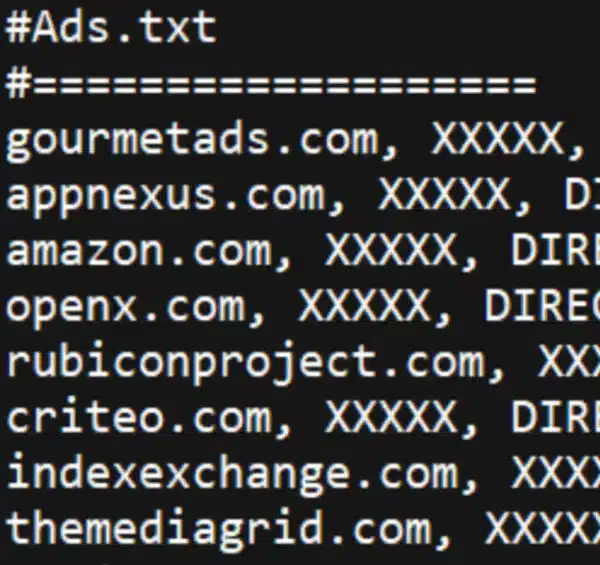
What is ads.txt ?
Ads.txt stands for “Authorized Digital Sellers” and it is a project created with the intention of preventing internet ad purchasing fraud and increasing transparency in the online programmatic advertising space.
An Interactive Advertising Bureau initiative, Ads.txt strives to create a directory of authorized online sellers. This is done through a text file that publishers can add to their web servers and list other companies that are authorized to sell their products. Therefore, ads.txt minimizes the chance of purchasing counterfeit or fraudulent ad inventory that results in fake traffic for advertisers.
Buyers can then check the validity of the ad inventory before buying it. When buying inventory at an exchange, bidders can check the publishers’ /ads.txt to verify that they are buying valid ad inventory. Think of the ads.txt file being like a dictionary or means for a buyer to “lookup” the legitimate seller of that website.
Ads.txt supports the following supplier relationships: publishers who use their own accounts on ad exchanges to sell their ad inventory, networks who programmatically sell for publishers, and partnerships where multiple sellers sell the same inventory.
Currently, most major publishers have integrated ads.txts, and ads.txt is being added as a targeting option in Demand Side Platforms to verify that they have the permission to sell a publisher’s ads.
« Back to Programmatic Glossary Index
Health Targeting Categories
Discover our Health Targeting Categories, all built on URL level Contextual Targeting. Cancer, Chronic Disease, General Health, Healthy Lifestyle, Infection, Medical Conditions, Sports and Targeting Healthcare Professionals, available for your next Advertising Campaign, Programmatic Deal or Managed Services campaign.