

Pharmaceutical Industry Trends
The pharmaceutical industry is undergoing continuous transformation as scientific breakthroughs, technological advancements, and digital technologies change healthcare needs and reshape the way medicines are discovered, developed, manufactured, and delivered. Advances in artificial intelligence, precision medicine, biotechnology, and data analytics are accelerating innovation, while evolving regulations, rising healthcare costs, and growing patient expectations are influencing how pharmaceutical companies operate and compete.
Understanding these pharmaceutical industry trends is essential for manufacturers, healthcare providers, investors, and policymakers alike. From smarter clinical trials and digital health solutions to sustainable manufacturing and patient-centered care, the trends shaping the industry today are driving improvements in efficiency, accessibility, and treatment outcomes while defining the future of global healthcare.
Key Takeaways
- The latest trends in the pharmaceutical industry are driving innovation through AI, personalized medicine, digital health, smarter manufacturing, and patient-centered care, helping improve healthcare outcomes and operational efficiency.
- Patient-centric healthcare is becoming the industry standard. Personalized medicine, decentralized clinical trials, and digital health solutions are engaging patients more actively throughout their treatment journey.
- Innovation must be balanced with resilience and compliance. Pharmaceutical companies are strengthening supply chains, adopting smart manufacturing, and adapting to evolving regulations to remain competitive in a rapidly changing healthcare landscape.
How the Pharmaceutical Industry is Changing
The global pharmaceutical industry is undergoing significant transformation, driven by scientific breakthroughs, digital innovation, and evolving healthcare needs. Pharmaceutical companies are rethinking how medicines are discovered, developed, manufactured, and delivered, with a growing focus on improving efficiency, accelerating innovation, and enhancing patient outcomes.
Artificial intelligence, genomics, digital health technologies, and real-world data are accelerating drug discovery, streamlining clinical trials, and enabling more personalized treatments. At the same time, automation, smart manufacturing, and advanced analytics are helping pharma companies improve operational efficiency, strengthen supply chains, and respond more effectively to changing market demands. Regulatory agencies are also evolving their frameworks to support innovation while maintaining high standards for safety, quality, and transparency.
Alongside these advances, the industry continues to face challenges such as pricing pressures, market access barriers, cybersecurity risks, supply chain disruptions, and evolving regulatory requirements. Organizations that successfully balance innovation with compliance, resilience, and patient-centered care will be better positioned for long-term success.
Key Drivers Behind the Industry’s Transformation
Several interconnected factors are reshaping the pharmaceutical landscape. Rapid advances in biotechnology, increasing investment in precision medicine, widespread adoption of artificial intelligence, and the growing use of real-world evidence are transforming every stage of the pharmaceutical value chain. Meanwhile, changing patient expectations, value-based healthcare models, sustainability initiatives, and greater collaboration between pharma companies, biotechnology firms, healthcare providers, and technology companies are creating a more connected, data-driven, and patient-centered healthcare ecosystem.
Understanding these drivers helps pharmaceutical professionals, healthcare organizations, investors, and policymakers prepare for emerging opportunities, address evolving challenges, and adapt to an increasingly innovative and competitive industry.
Transforming Clinical Trials: From In Silico to Decentralized Models
Clinical trials remain one of the most time-consuming, expensive, and complex stages of clinical development. Recruiting suitable participants, maintaining patient engagement, and generating high-quality clinical data can significantly delay the introduction of new therapies. To address these challenges, pharmaceutical companies are redesigning clinical research using digital technologies, advanced analytics, and patient-centered approaches that improve efficiency while maintaining scientific rigor.
One of the most significant advancements is the growing use of in silico clinical trials, which use computer simulations, artificial intelligence, and predictive modeling to evaluate drug candidates before human testing begins. These AI-driven simulations help researchers predict drug behavior, optimize dosing strategies, identify potential safety concerns, and prioritize the most promising therapies for clinical evaluation.
At the same time, decentralized clinical trials (DCTs) are transforming how studies are conducted by moving many research activities beyond traditional clinical sites. Through telemedicine, wearable devices, mobile health applications, electronic consent, remote monitoring, and home healthcare services, participants can complete many study procedures from their homes. This approach improves patient convenience, expands access to more diverse populations, enhances participant retention, and enables researchers to collect continuous real-world data throughout the study.
Cloud-based trial management systems, electronic patient-reported outcomes (ePRO), digital biomarkers, and AI-powered analytics are improving clinical trial efficiency by streamlining data collection, accelerating patient recruitment, optimizing site selection, and supporting adaptive trial designs. These innovations help pharmaceutical companies reduce development timelines, improve data quality, and make clinical research more flexible and cost-effective.
As clinical research continues to evolve, hybrid trial models that combine traditional site visits with decentralized approaches are becoming increasingly common. By integrating in silico modeling, artificial intelligence, remote monitoring, and real-world evidence, pharmaceutical companies can conduct faster, more inclusive, and patient-centered clinical trials while improving the efficiency and quality of clinical research.
Patient-Centricity and Digital Health: Beyond the Pill
Patient-centricity has become a defining strategy in the pharmaceutical industry, shifting the focus from treating diseases to improving the overall patient experience. Rather than viewing patients as passive recipients of care, pharmaceutical companies are increasingly involving them in the design, development, and delivery of therapies. Patient feedback now plays a key role in shaping clinical trial protocols, treatment endpoints, patient support programs, and educational resources, helping organizations develop solutions that better reflect real-world needs.
This shift has also given rise to the concept of “beyond the pill,“ where pharmaceutical companies complement medicines with digital health technologies that support patients throughout their treatment journey. Companion mobile applications, remote patient monitoring platforms, wearable devices, medication reminders, virtual coaching services, and healthcare dashboards are becoming valuable complements to traditional therapies. These tools help improve medication adherence, enable continuous health monitoring, and provide healthcare professionals with real-time insights that support more personalized care.
Digital therapeutics, connected medical devices, and smart drug delivery technologies are further expanding the role of digital health. For example, sensor-enabled medications, wearable health trackers, and remote monitoring systems can help patients manage chronic conditions more effectively while generating valuable real-world data. This information allows pharmaceutical companies and healthcare providers to better understand treatment effectiveness outside controlled clinical settings and make more informed healthcare decisions.
Emerging technologies such as virtual reality (VR) and augmented reality (AR) are also finding applications in patient education, rehabilitation, pain management, and behavioral health. Although many of these solutions continue to evolve, they demonstrate how digital innovation can complement traditional medicines and enhance patient engagement.
As healthcare becomes increasingly connected, patient-centricity is extending far beyond the prescription itself. By combining innovative therapies with digital health technologies, personalized support services, and real-world insights, pharmaceutical companies are creating more holistic healthcare experiences that improve treatment adherence, enhance patient engagement, and support better health outcomes.
Precision Medicine, Biologics, and Advanced Modalities
Precision medicine is transforming pharmaceutical research and development by replacing the traditional one-size-fits-all approach with therapies tailored to individual patients. Advances in genomics, biomarker discovery, companion diagnostics, and multi-omics technologies are helping researchers better understand the biological causes of disease and identify the patients most likely to benefit from specific treatments. As a result, pharmaceutical companies can develop more targeted therapies, improve clinical trial success rates, and reduce the risk of adverse drug reactions.
At the same time, biologics continue to play a critical role in reshaping the pharmaceutical landscape. Unlike traditional small-molecule drugs, biologics, including monoclonal antibodies, are developed from living cells and are designed to target specific biological pathways associated with disease. They have become essential for treating complex conditions such as cancer, autoimmune diseases, and chronic inflammatory disorders. The continued growth of biosimilars is also expanding patient access to biologic therapies by providing more cost-effective treatment options and encouraging greater competition within the pharmaceutical market. Biologics and biosimilars are also reshaping the competitive landscape for branded drugs, encouraging greater innovation while expanding treatment options.
The industry is also experiencing rapid growth in advanced therapies, including gene therapies, cell therapies, RNA-based medicines, antibody-drug conjugates (ADCs), and gene-editing technologies. These innovative treatments aim to address diseases at their underlying cause rather than simply managing symptoms, creating new possibilities for patients with complex and previously difficult-to-treat conditions.
However, these therapies also present significant challenges, including specialized manufacturing, cold-chain logistics, complex regulatory requirements, and high development costs. As a result, pharmaceutical companies, healthcare providers, and payers are developing new approaches to pricing, reimbursement, and commercialization that balance innovation with patient access.
As scientific understanding continues to advance, precision medicine, biologics, and advanced therapies are becoming central to modern healthcare. Together, these innovations are enabling more targeted, effective, and personalized treatments while expanding therapeutic options and improving patient outcomes.
Manufacturing, Supply Chains, and 3D Printing of Medicines
Pharmaceutical manufacturing is becoming smarter as drug manufacturers are more resilient and increasingly technology-driven. To reduce supply chain risks and ensure a reliable supply of medicines, companies are investing heavily in diversifying supplier networks, expanding regional production, and adopting more flexible manufacturing operations. These strategies help improve business continuity while responding more effectively to changing market demands.
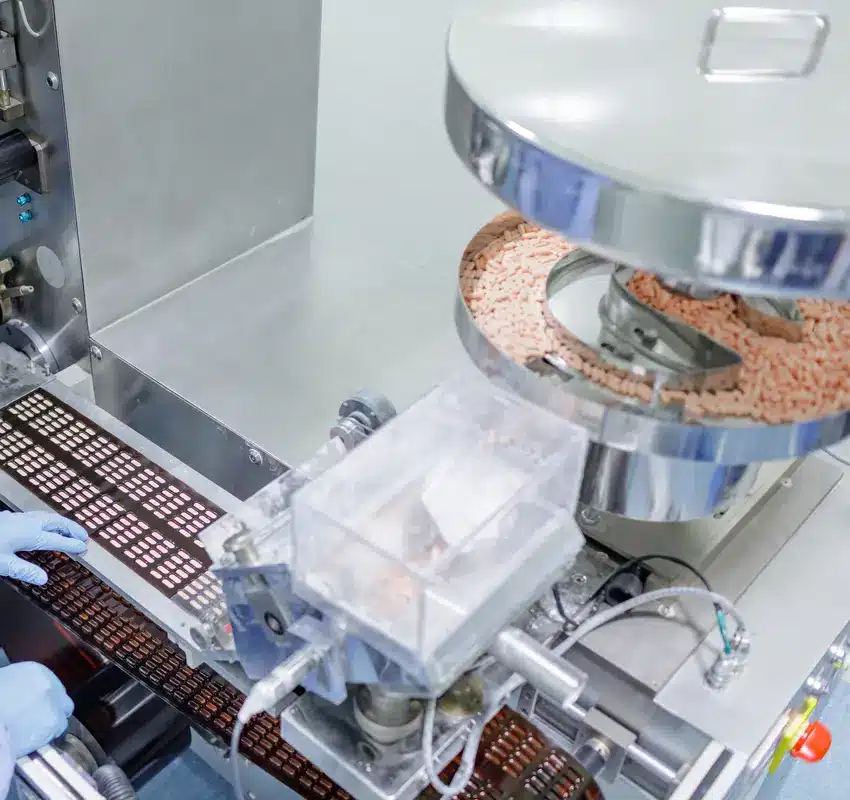
Smart manufacturing technologies such as artificial intelligence, automation, robotics, digital twins, and predictive maintenance are transforming production processes. These innovations help manufacturers reduce costs, improve efficiency, enhance quality control, reduce downtime, and support regulatory compliance, enabling manufacturers to produce medicines more quickly and consistently.
Another emerging trend is the use of 3D printing in pharmaceutical manufacturing. This technology enables personalized medicines with customized dosages and drug-release profiles while supporting small-batch production for specialized treatments. Although still evolving, 3D printing has the potential to play an important role in precision medicine and patient-centered care.
Market Access, Policy Pressure, and Global Pharma Market Dynamics
The global pharmaceutical market continues to expand, driven by rising healthcare demand, aging populations, increasing investment in innovative therapies, and improved access to medicines. As healthcare systems evolve and patient needs become more complex, pharmaceutical companies are adapting their research, development, and commercialization strategies to meet changing market expectations.
As the market evolves, pharmaceutical companies face growing pressure to demonstrate not only the clinical effectiveness of new therapies but also their value to patients and healthcare systems. Governments, payers, and health technology assessment (HTA) organizations are placing greater emphasis on cost-effectiveness, real-world evidence, and long-term health outcomes. As a result, market access planning is becoming an integral part of the drug development process, with pharmaceutical companies generating stronger clinical and economic evidence earlier in development.
New commercial approaches, including value-based pricing, outcomes-based reimbursement agreements, and innovative payment models, are also gaining momentum, particularly for specialty medicines and advanced therapies. These strategies aim to improve patient access while helping healthcare systems manage rising treatment costs.
As policy frameworks, reimbursement requirements, and global market dynamics continue to evolve, pharmaceutical companies must balance innovation, affordability, and patient access. Organizations that successfully align scientific advancement with evolving business models and regulatory expectations will be better positioned for sustainable growth in an increasingly competitive global market.
Regulation, Ethics, and the Future Workforce in Pharma
As pharmaceutical innovation accelerates, regulatory frameworks are evolving to keep pace with advances in artificial intelligence, digital health, gene therapies, and other emerging technologies. Regulatory agencies are adopting more flexible and science-driven approaches to support innovation while maintaining high standards for safety, quality, and patient protection. For pharmaceutical companies, staying compliant with changing regulations has become an essential part of bringing new therapies to patients while meeting regulatory requirements.
Ethical considerations are becoming increasingly important alongside evolving regulatory frameworks. The responsible use of artificial intelligence, protection of patient data, transparency in algorithmic decision-making, and equitable access to innovative therapies are shaping industry priorities. Pharmaceutical companies are expected to balance technological innovation with strong governance, ensuring that new treatments and digital solutions are safe, reliable, equitable, and accessible to diverse patient populations.
As the pharmaceutical industry becomes more digital and interconnected, long-term success will depend on combining innovation with ethical leadership, regulatory excellence, and a highly skilled workforce. Companies that embrace continuous learning, responsible technology adoption, and cross-functional collaboration will be better positioned to adapt to an evolving healthcare landscape while delivering meaningful value to patients and healthcare systems.
The Future of the Pharmaceutical Industry
The pharma industry is entering a new phase of innovation, driven by advances in science, digital technologies, and a growing focus on personalized, patient-centered care. From artificial intelligence and precision medicine to decentralized clinical trials and advanced therapies, organizations are rethinking how medicines are discovered, developed, manufactured, and delivered.
As the industry continues to evolve, success will depend on balancing innovation with affordability, regulatory compliance, operational resilience, and patient access. Collaboration across the healthcare ecosystem will remain essential to accelerating scientific progress while maintaining high standards of safety, quality, and ethical responsibility.
The trends shaping the pharma industry reflect a broader shift toward more connected, data-driven, and patient-focused healthcare. Leading companies that embrace innovation, adapt to changing market demands, and remain committed to improving patient outcomes will be well-positioned for long-term success in an increasingly dynamic healthcare landscape.